


Subscribe for NMSafety News
What Benefits Does a Chemical Resisatant Glove Offer Workers?
17 Dec, 2025
By hqt

A Chemical Resisatant Glove may seem like a small part of a safety program, but for workers it can make a big difference. It separates skin from aggressive liquids and everyday splash risks. Nitrile gloves are built to resist oils, greases, and many chemical products. They also help with grip and comfort, so hands feel safer and more stable. But performance on paper is not always the same as performance on site. What advantages does the right glove bring in real operations? And what signs show your existing gloves are falling behind?
Why Workers Rely on Chemical Resisatant Glove Protection
In many facilities, hazardous liquids are part of the daily routine. Workers handle cleaning agents, solvents, acids, alkalis, pesticides, and fertilisers. On paper, everyone knows these substances are dangerous. In practice, gloves are sometimes chosen based on price or habit, not on real protection.
That’s where the problems start. We often hear about:
✅Thin disposable gloves that swell, tear, or break down in chemicals
✅Hands that stay wet and sweaty, so workers “forget” to wear gloves
✅Poor grip on wet or oily tools, increasing the chance of slips and spills
✅Confusion about which glove actually protects against which chemicals
A well-made Chemical Resisatant Glove helps break this cycle. Nitrile is known for its resistance to oils, greases, chemicals, and water, so the glove keeps its shape and performance instead of becoming soft or sticky. When gloves last longer in contact with chemicals, workers don’t need to change them as often, and supervisors get more predictable protection on the shop floor.
From our point of view at SRSafety, there’s a very simple rule: if gloves are not comfortable and reliable, workers won’t wear them properly. That’s why we design our Chemical Resisatant Glove around real usage, not just standards and test reports.
- Common Pain Points On The Shop Floor
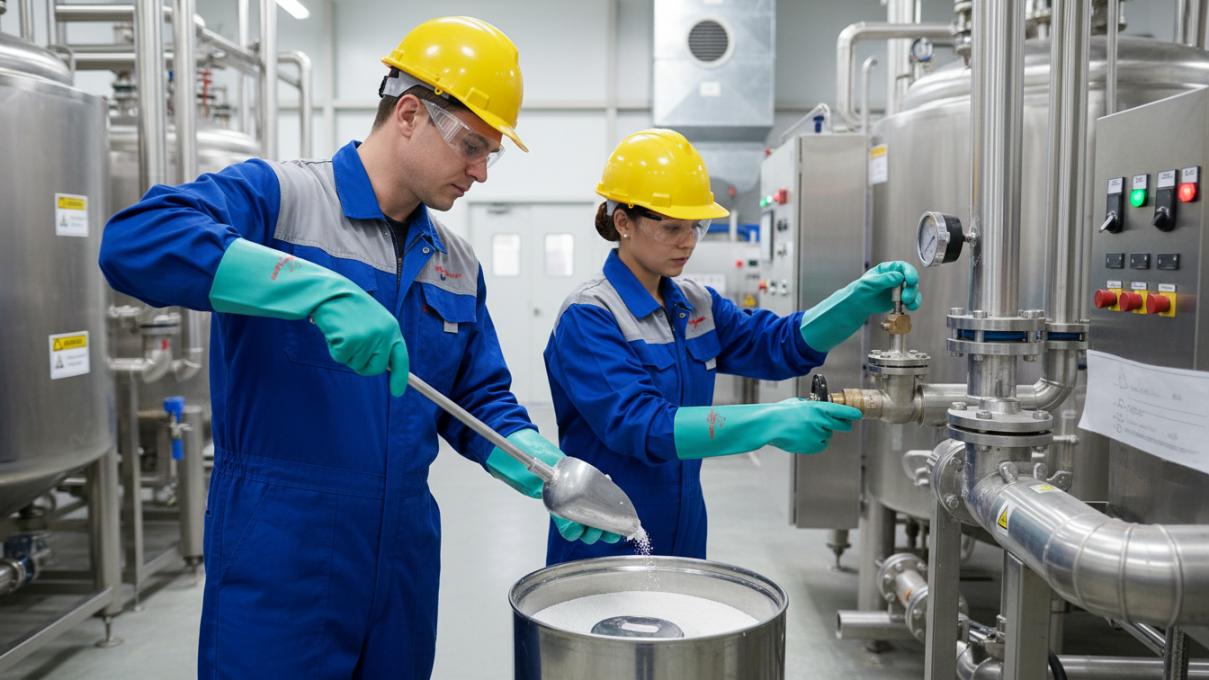
If you walk through a chemical plant or a large farm, you’ll see lots of small risks that add up over time. A splash when mixing chemicals. A leaking hose. A slippery valve. A drum that needs wiping. None of these tasks seem huge on their own, but repeated contact with chemicals can irritate the skin, cause dryness, or create more serious health issues.
A nitrile-based Chemical Resisatant Glove forms a barrier between the skin and those daily exposures. Because the glove is waterproof, hands stay dry even with repeated contact with liquids. When workers know their gloves can handle the job, they can focus on doing the work safely and efficiently instead of worrying about what happens if a splash lands on their skin.
How SRSafety Turns Lab Performance into Daily Comfort
A glove can look good in a brochure but fail in the first week if it’s not designed for long wear. At SRSafety, we combine a flocked lining and a durable nitrile coating to support workers through full shifts, not just short tasks.
Inside the glove, there’s a soft flocked liner. This fine layer of flocking material absorbs moisture from the skin. Over a long shift, it helps reduce sweat build-up and that sticky feeling that makes people want to pull off their gloves. It’s a small detail, but it has a big impact on how often gloves are actually worn.
On the outside, the nitrile coating brings three key benefits workers notice:
✅Strong resistance to oils, greases, chemicals, and water
✅Abrasion resistance for handling rough tools and surfaces
✅Flexibility, so the glove moves naturally with the hand
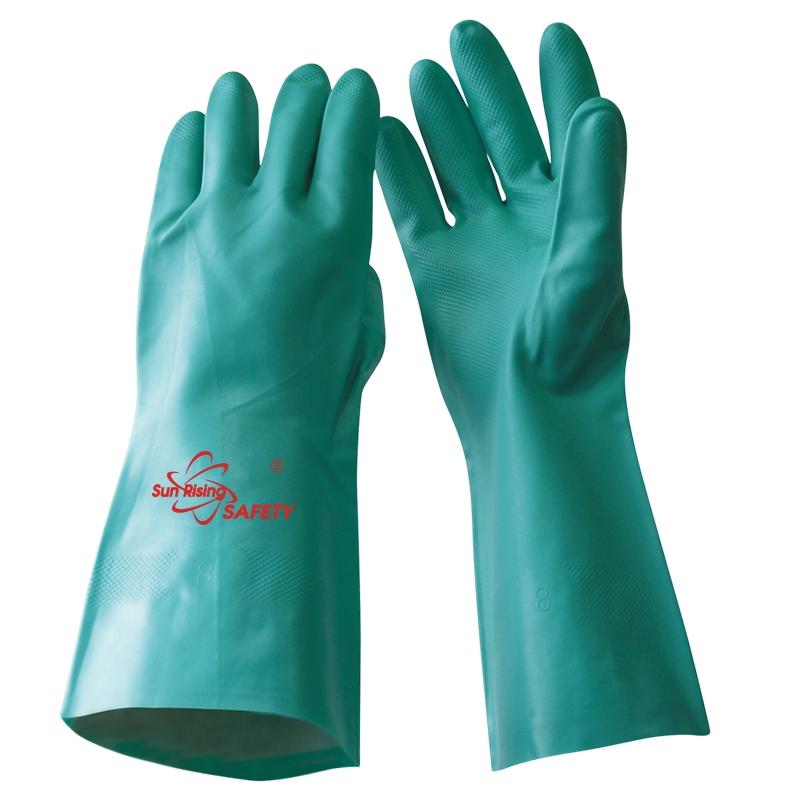
Instead of feeling stiff or bulky, our Chemical Resisatant Glove bends with the fingers. That flexibility really matters when operating valves, adjusting small parts, or using hand tools in tight spaces. Workers can keep their dexterity without sacrificing protection.
We also manufacture the glove in multiple sizes, typically from small to extra-large and beyond. This allows safety managers to fit the whole team properly. A loose glove can catch on machinery or slip at the wrong moment. A glove that’s too tight causes fatigue and discomfort. Getting the size right is one of the simplest ways to boost safety and worker satisfaction at the same time.
For buyers, planning is another concern. Production lead times typically fall within a clear range, so PPE managers can schedule orders and keep consistent stock. That means fewer last-minute purchases of “whatever’s available,” which often leads to lower protection levels.
- Inside and Outside: Comfort, Grip, and Durability
Comfort, grip, and durability may sound like marketing words, but they show up in real complaints from real workers: “My hands are sweating,” “These gloves are too slippery,” “They tear too quickly.”
A Chemical Resisatant Glove with a flocked liner reduces that sweaty feeling. Workers are more willing to keep gloves on, even in warmer environments or during heavy activity. That supports a stronger safety culture, because protection is actually used.

Grip is just as important. In chemical and agriculture work, surfaces are rarely clean and dry. Drums, hoses, and tools often have a film of oil, water, or chemicals. Nitrile helps maintain a stable grip in these conditions, which can reduce drops, spills, and small incidents that might otherwise grow into bigger problems.
Durability closes the loop. A glove that wears out too fast costs you more in the long run. By focusing on abrasion resistance and chemical stability, SRSafety aims to reduce replacement frequency while still giving workers a flexible, comfortable glove they don’t mind wearing.
Choosing the Right Chemical Resisatant Glove for Your Team
From SRSafety’s perspective, a Chemical Resisatant Glove should never be just a generic item pulled off a shelf. Every site has its own mix of chemicals, its own tasks, and its own safety rules. That’s why we offer customization to better match your real working conditions.
You can adjust key elements such as:
✅Glove length when you need extra forearm coverage in tanks or wash areas
✅Thickness to find the right balance between sensitivity and protection
✅Logo and packing options to fit your brand and warehouse system
We work closely with customers in chemical processing, agriculture, cleaning, and maintenance to understand questions like:
❓Do your workers handle fine parts or mostly heavy tools?
❓Are they exposed to heavy splashes or light but constant contact?
❓Which specific chemicals are used in your processes?

The answers help us recommend the most suitable Chemical Resisatant Glove configuration for your site, instead of a “one-size-fits-all” approach.
If you’re reviewing your current hand protection program, it might be worth asking a few simple questions: Are the gloves you use really designed for oils, greases, and chemicals? Do your workers complain about sweaty hands, poor grip, or frequent tearing? Are you confident the gloves match the actual risks on site?
If any of those points sound familiar, it may be time to upgrade.
Call to action
If you’re ready to improve both protection and comfort for your team, reach out to SRSafety. Share your process, your chemical risks, and your safety goals with us. We’ll work with you to develop or select a Chemical Resisatant Glove solution that supports your workers every day and helps your business maintain a strong, practical safety culture.
