


Subscribe for NMSafety News
Can One Cut Resistant Glove Handle Cuts, Oil, and Abrasion Together?
10 Jan, 2026
By hqt

Can one Cut Resistant Glove really manage sharp edges, slick oil, and harsh abrasion without slowing workers down? On most sites, those hazards show up together. A fitter moves from deburring steel to tightening a leaking coupling. A carpenter grips wet lumber and then threads a fastener past a rough concrete edge. If your glove falters in any one of those moments – losing grip in oil, fraying under scuffing, or stiffening the hand during fine assembly – the risk climbs and productivity drops.That’s why SRSafety set out to build a Cut Resistant Glove that balances cut protection with reliable grip and coating durability, while staying comfortable through a full shift.
The Everyday Reality of Mixed Hazards
Hazards rarely queue politely. They overlap. Thin edges, burrs, and sheet metal form a constant cut exposure in fabrication. Oil and water are frequent visitors in maintenance and process areas.Concrete, rebar, and cast parts chew away at palm coatings through repeated contact. A glove aimed at a single hazard often creates a new problem somewhere else. High-cut fabrics can soak up fluid and lose traction. Lightweight dips may pass an initial slice test but sand away quickly when parts scuff the palm. Stiff constructions can resist cuts yet slow the fingers when aligning screws or wiring connectors.
Beyond hazard control, teams have to align with standards and keep programs simple. Procurement needs recognizable benchmarks – think ANSI A3 and ISO 13997 Level C for cut protection – so audits are straightforward. Site leads look for stable grip in wet or oily zones because most hand injuries start with a small slip. Safety officers want the wrist covered where repetitive handling puts that area in harm’s way. Operations want gloves that last; premature coating wear drives replacements and bloats total cost of ownership.
- Why Single-feature Gloves Fall Short?
When a glove is built around one metric, trade-offs creep in fast. You might get cut performance, but the moment oil lowers friction, the grip disappears and the hand works harder to compensate. You may get good dry traction, but the coating abrades after a week of rough contact and needs swapping mid-shift. You may get a rugged feel, but dexterity suffers and workers start removing gloves for precision tasks – defeating the purpose.
The result is operational friction: multiple SKUs, frequent glove changes, confusion on the floor, and more downtime.SRSafety approaches the problem as a system. The liner should handle cuts without bulking up the hand. The coating should keep grip stable in variable conditions and resist abrasion. The cuff should extend protection to the wrist. And the glove should remain nimble enough to pick small parts, thread fasteners, and move quickly without constant removal.

SRSafety‘s Integrated Solution
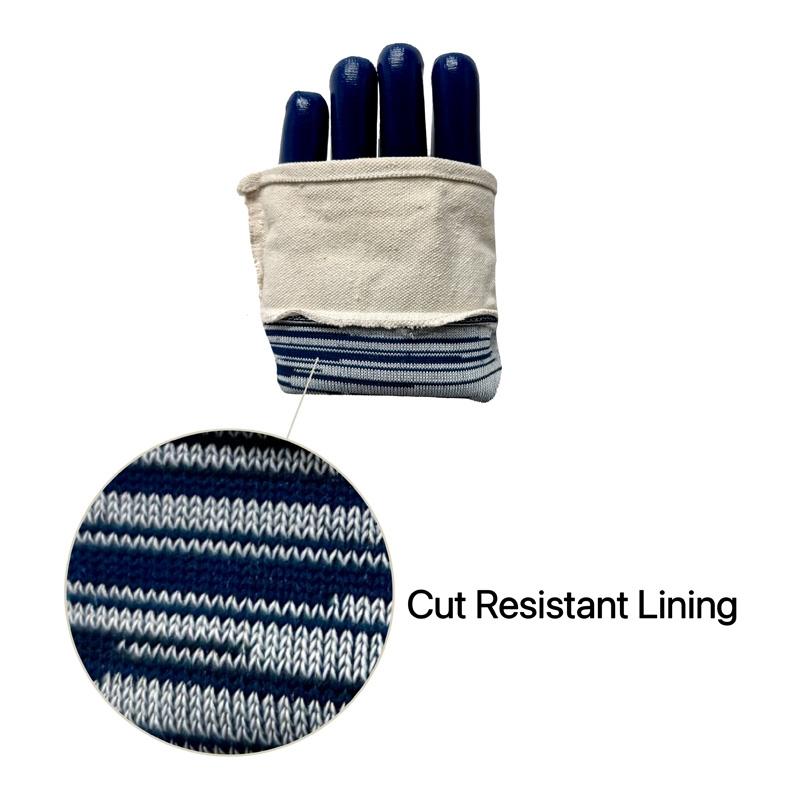
SRSafety‘s Cut Resistant Glove is engineered to perform across cuts, oil, and abrasion. At its core is a polyester and glassfiber liner designed for consistent cut resilience without sacrificing hand mobility. With this liner, the glove achieves ANSI A3 and ISO 13997 Level C – levels suited to metal handling, sheet work, and general tasks where sharp edges are common but dexterity is still essential.
Over the liner, a smooth nitrile full coating creates a continuous barrier. Full coverage matters for mixed-risk sites.It helps prevent fluid ingress, stabilizes grip in dry handling, and stands up to oil and water exposure. The smooth nitrile surface is tuned for abrasion resistance, supporting longer service life when parts or materials routinely scuff the palm.To complete the protection envelope, SRSafety includes a safety cuff that extends coverage to the wrist – valuable during extended reach, repetitive handling, or when edges drift beyond the palm area.
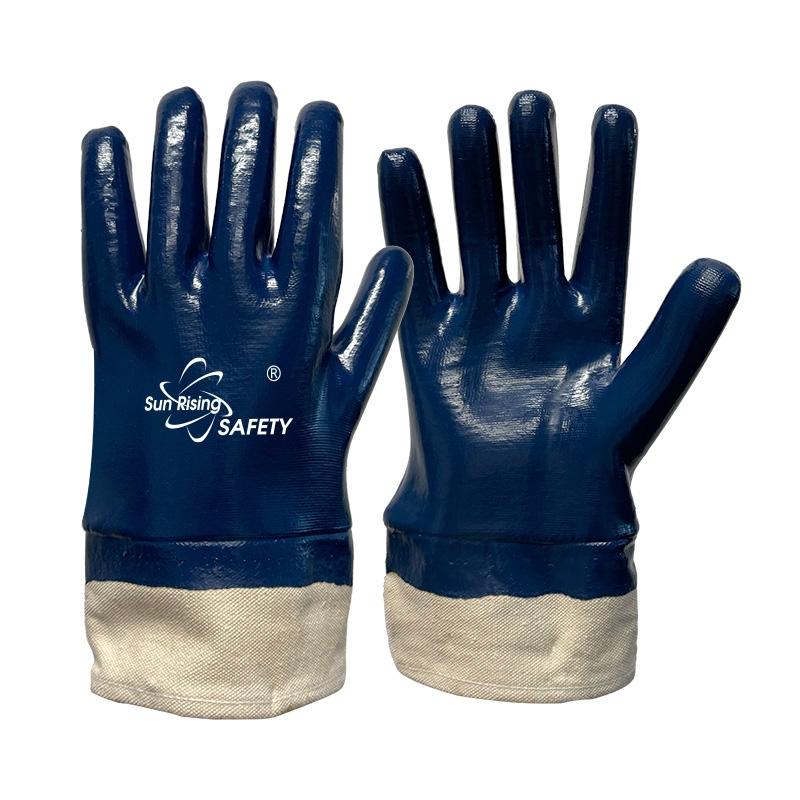
The goal is practical control on the job. Workers can move from oil-exposed maintenance to abrasive material handling without swapping gloves. Dexterity remains high, so small components and tools are manageable. Supervisors see fewer interruptions. Procurement reduces complexity while staying aligned to standards.Safety teams document the cut rating and cuff coverage with confidence during audits and incident reviews.
- What Sets This Cut Resistant Glove Apart?
• ANSI A3 and ISO 13997 Level C cut protection for dependable safety in mixed-risk environments
• Smooth nitrile full coating that resists oil, water, and abrasion while maintaining consistent contact
• Polyester and glassfiber liner that balances cut resilience with nimble finger movement
• Safety cuff to help protect the wrist in high-contact and extended-reach tasks
• Secure dry grip so handling stays predictable as conditions change across a shift
- Specifications and supply details
• Sizes: 8/M, 9/L, 10/XL, 11/2XL so teams across the site can be fitted properly
• Industries: Construction, forestry, oil and gas, steel fabrication, and general industrial maintenance
• Lead time: 60 – 120 days to align with project schedules and phased rollouts
• Minimum order quantity: 6000 pairs to support program-level standardization
• Customization: Logo, color, and packing options to simplify distribution and reinforce brand alignment
How to Choose and Deploy the Right Glove
Begin with a targeted risk review of tasks, materials, and contact conditions.Note the edge profiles (thin sheet, burrs, castings), the frequency and type of oil or water exposure, and the typical abrasion sources (concrete, rebar, rough parts). Map those risks to engineering controls and PPE. If your teams transition between cutting, oily maintenance, and rough handling during the same shift, a Cut Resistant Glove with a nitrile full coating and a cut-rated liner removes unnecessary glove changes and reduces error risk.
Training is where performance becomes consistent. Teach the why behind the design.Workers should know how a full coating prevents soak-through and why smooth nitrile maintains a reliable dry grip across variable conditions. Reinforce inspection routines. Replace gloves showing visible coating damage or deep abrasion. Track usage and identify hotspots – those insights help adjust task assignments, improve stock planning, and spot process changes that may be creating new wear patterns.
Standardization simplifies the program. Procurement can reduce SKUs by settling on one Cut Resistant Glove that meets the core hazards across teams.This streamlines issuance, lowers mis-allocations, and makes compliance checks faster. With ANSI A3 and ISO Level C, safety staff can reference recognized benchmarks during audits. The safety cuff detail supports wrist protection, a point often overlooked when tasks speed up or reach extends.
Consider total lifecycle cost.A glove that resists abrasion better needs fewer replacements. A glove that maintains grip in oil reduces near misses and micro-injuries. A glove that pairs cut protection with dexterity keeps tools in the hand and work moving, reducing the urge to remove PPE for fine tasks. These gains add up in daily operations and annual budgets.
- Implementation Tips for Mixed-risk Sites
• Match tasks to cut rating: For metal handling, sheet work, and sharp edges, ANSI A3 / ISO Level C provides balanced protection with movement control
• Use full nitrile coatings when oil or water is routine to stabilize grip and prevent soak-through
• Select safety cuffs where reach extends or repetitive handling puts the wrist near edges
• Fit the full workforce with the available sizes (8/M to 11/2XL) to maximize comfort and consistent performance
• Apply customization (logo, color, packing) to reduce mix-ups and make site distribution smoother
- Why This Approach Works?
A high-performing Cut Resistant Glove is not a single feature – it’s a system.The liner delivers cut protection while staying flexible. The nitrile full coating maintains grip and resists oil and abrasion. The safety cuff offers wrist coverage where many gloves stop short. When these elements are integrated, workers don’t have to choose between protection and performance; they get both.SRSafety builds gloves for overlapping hazards because that’s how work happens in the field. This Cut Resistant Glove combines a polyester and glassfiber liner for cut resilience, a smooth nitrile full coating for oil, water, and abrasion defense, and a safety cuff to extend protection where it matters. It supports dexterity so tasks keep moving. It aligns with standards so audits go faster. It’s designed for durability so procurement can plan with clarity.
Call to Action
If you’re ready to consolidate hand protection around one Cut Resistant Glove that handles cuts, oil, and abrasion together, talk to SRSafety. Request a technical consultation, secure samples for field trials, and plan your rollout.Lead times range from 60 to 120 days, MOQ starts at 6000 pairs, and customization on logo, color, and packing is available to match your site needs. Equip your teams to work safer, longer, and smarter with a single, integrated glove solution from SRSafety.
