


Subscribe for NMSafety News
What Cut Level Impact Resistant Glove Do You Need?
11 Jan, 2026
By hqt
An Impact Resistant Glove only delivers real-world protection when it’s selected to match the actual tasks in front of your team. That means defining three things before you buy: where cuts can occur, where impact strikes can happen, and how grip conditions vary across stations. When these variables are clear, you can dial in the right cut performance, pair it with proven dorsal impact protection, and maintain confident control in dry, wet, or oily environments.
Why Cut Performance Sets the Direction for Impact Protection
Cut hazards and impact hazards often arrive together, but they don’t behave the same. Sharp edges attack the palm and fingers; crushed knuckles come from pinch points, falling objects, and sudden collisions against hard surfaces. Your Impact Resistant Glove strategy should therefore start with cut level, then layer on dorsal protection mapped to likely strike zones.
SRSafety offers cut protection from ANSI A3 to A7, allowing you to match exposure without dulling dexterity:
– A3 – A4: Ideal for light to moderate cut exposure, such as assembly work, routine maintenance, and handling small parts with smooth or deburred edges.
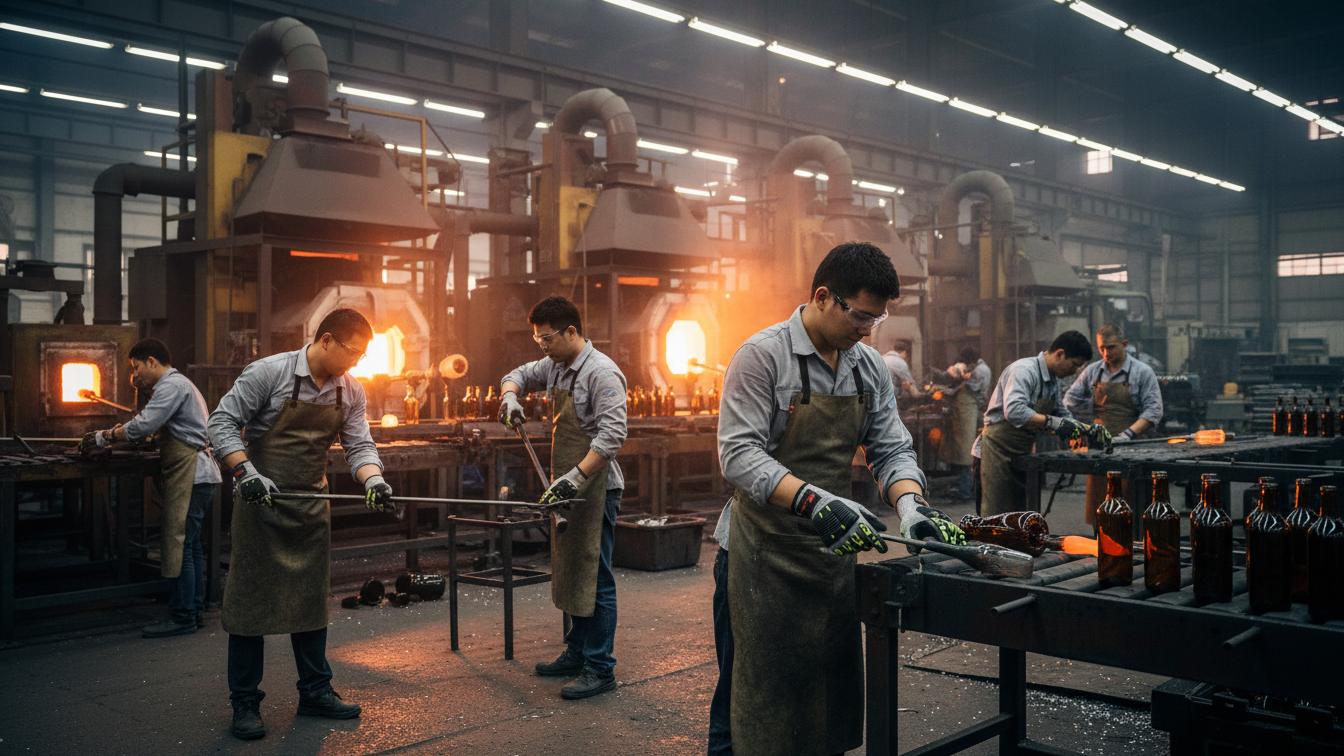
– A5: The go-to range for mixed hazards – fabrication, sheet handling, and glass processing – where cut forces are higher and edge quality varies.
– A6 – A7: Reserved for frequent, severe contact with heavy-gauge steel, aggressive edges, or dense glass stacks.
Going too low invites lacerations; going too high can numb feel and slow work, which sometimes tempts operators to remove gloves. The right choice balances defense and control so productivity stays high and hands stay intact.
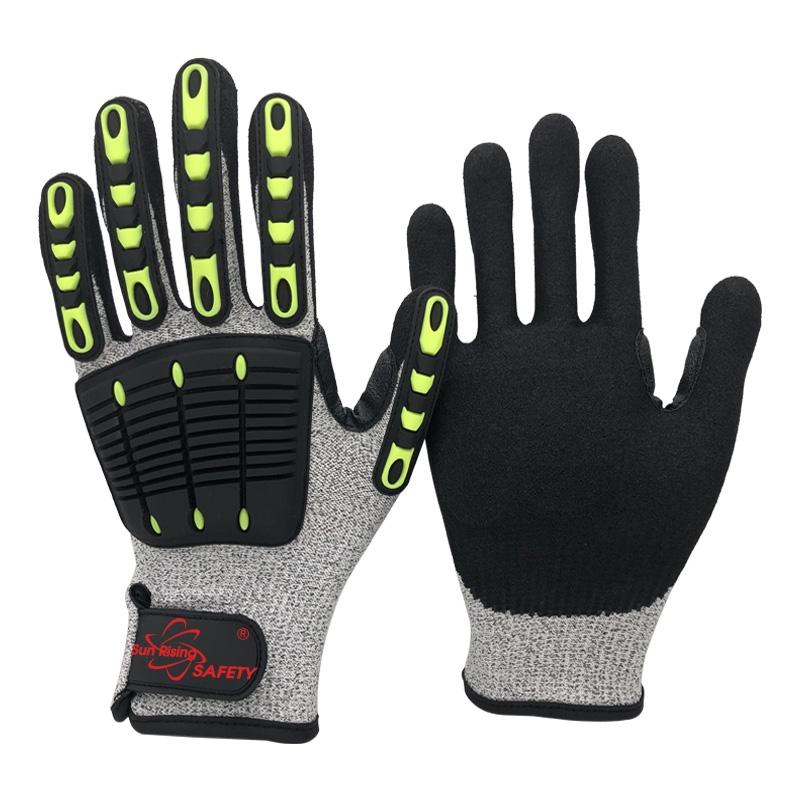
Impact forces require a different solution. SRSafety’s Impact Resistant Glove uses a sewn thermoplastic rubber (TPR) layout across the back of the hand to absorb and deflect energy. This dorsal protection is verified to ANSI/ISEA 138 Level 1 and is tuned to flex with the hand, not against it. When cut level aligns to the sharp-edge threat and TPR is positioned over knuckles and fingers where knocks are likely, both sides of the hand are covered without compromising precision.
- Materials that Make Standards Matter
A glove is only as good as the materials that form it. SRSafety builds from a nimble, 13-gauge nylon base that tracks natural hand motion. High-performance polyethylene (HPPE) and glass fiber are integrated in the liner to raise cut resistance while keeping bulk low, so operators can trace edges, guide fasteners, and manipulate small components with meaningful tactile feedback. On the palm, a sandy nitrile coating provides micro-texture that grips through oil, water, and coolant. This reduces micro-slips, helps control tool torque, and minimizes the over-squeezing that leads to fatigue. The result is an Impact Resistant Glove that feels intuitive right away and keeps performing as the hours stack up.
How SRSafety Engineers an Impact Resistant Glove for Real Work
Performance on a line, in a yard, or at a rig comes from systems working together – the liner, the coating, and the protective elements. SRSafety designs from the inside out to deliver durability, dexterity, and predictable grip in variable conditions.
The 13-gauge nylon/HPPE/glass fiber knit yields a thin yet tough barrier to cuts and abrasion that preserves precision. On the palm, sandy nitrile supplies durable, oil-tolerant grip so slippery sheet or glass can be managed confidently against the clock. A steady grip lowers the likelihood of sudden slips that can lead to edge strikes or blade contact.
Impact energy is managed by a sewn TPR array across knuckles and fingers, shaped to flex with the hand’s natural range. Anti-vibration cushioning under the palm trims tool shake and recurring knocks, helping hands stay fresh and precise hour after hour. The thumb – forefinger saddle is reinforced to slow breakdown where wear is most aggressive. A secure wrist, finished with an adjustable Velcro closure, keeps the glove seated, blocks debris, and maintains fit as tasks change.
✅ Key construction highlights:
– 13-gauge nylon with HPPE and glass fiber for strong cut resistance with agile movement
– Sandy nitrile palm for confident grip in wet, oily, or coolant-laden environments
– Sewn TPR on the dorsal side, verified to ANSI/ISEA 138 Level 1 for dependable impact protection
– Anti-vibration padding in the palm to reduce fatigue during sustained tool use
– Reinforced thumb – index saddle to resist tearing at a known stress point
– Adjustable Velcro wrist closure for a secure, tailored fit
– Sizes from S to 3XL for consistent protection across diverse teams
– Customizable TPR pattern, logo, color, and packaging to align with site standards
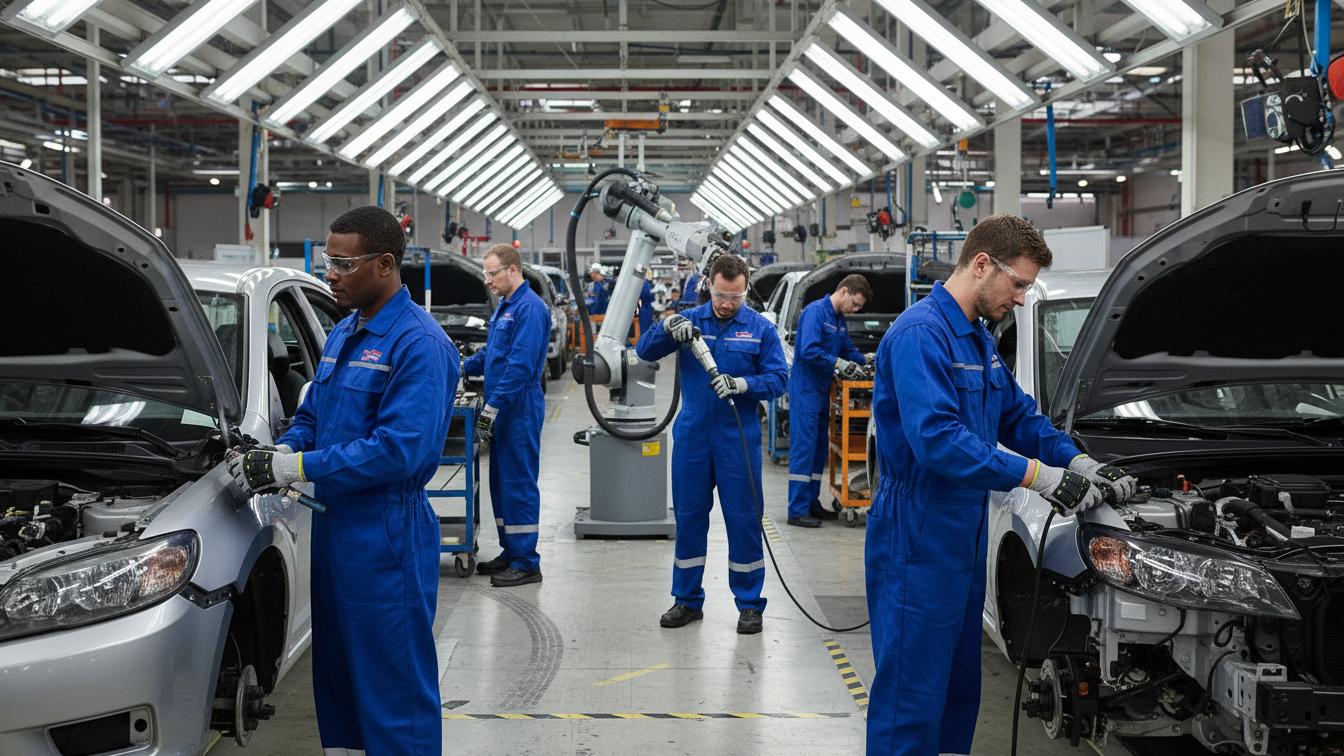
This integrated approach lets teams in automotive, construction, glass handling, oil and gas, steel processing, and forestry standardize on one Impact Resistant Glove family while tailoring cut levels by workstation. Training becomes simpler, procurement gets cleaner, and user confidence grows.
A Simple, Disciplined Workflow to Choose the Right Cut Level
Guesswork is expensive. A brief, structured process ties the glove to the job.
Step 1: Map the Hazards
List the sharp sources – stamped edges, burrs, glass, blades, cable strands – and how often hands meet them. Note whether contact is incidental or sustained. Identify likely impact zones on the back of the hand during tool handling, material transfer, or near pinch points. Record surface conditions: dry, wet, oily, or coolant present.
Step 2: Match Cut Level to Exposure
– Light to moderate exposure: Choose A3 – A4 for assembly and maintenance where contact is incidental and edges are smooth. Pair with full dorsal TPR to guard against incidental knocks.
– Elevated exposure: Choose A5 for metal fabrication, sheet handling, and variable glass edges. A sandy nitrile palm helps stabilize grip on oily parts to prevent sudden slips.
– Severe, frequent exposure: Choose A6 – A7 for heavy-gauge steel, aggressive edges, or demolition. A 13-gauge liner preserves precision so higher protection does not erase feel.
Step 3: Control Grip Variables
Grip failure is a common root cause of hand injuries. In wet or greasy zones, sandy nitrile channels fluid away and maintains a high-friction interface. This keeps tools accurately positioned and reduces the need to over-squeeze, which can lead to fatigue during long runs with impact drivers, grinders, or polishers. Anti-vibration padding adds stability where powered tools are routine.
Step 4: Fit for Performance
Fit affects safety. Too loose can snag or spin; too tight can restrict circulation and blunt dexterity. Select sizes that match the workforce and use a wrist closure to lock in the fit. When sizing is correct, cut-resistant fibers align over pressure points and TPR tracks cleanly with motion. Offering S to 3XL simplifies issuing gear and supports consistent protection across shifts.
Step 5: Validate and Communicate
Reference recognized benchmarks – ANSI cut levels and ANSI/ISEA 138 for impact – when building your PPE matrix. Post chosen levels at workstations, explain the selection logic, and run wear trials under real conditions to confirm comfort and grip. When workers understand why a specific Impact Resistant Glove was selected, compliance rises and incidents drop.
- Procurement Choices that Lower Total Cost
Unit price doesn’t tell the whole story. Service life, grip retention in oil or coolant, and durability at known wear points – especially the thumb – index saddle – often determine true cost. A glove that keeps traction in contaminated environments and resists tearing at stress zones stays in rotation longer. Reduce replacement cycles to decrease waste, avoid downtime, and minimize PPE room visits. Cutting back on change-outs trims waste, shortens stoppages, and reduces PPE cabinet traffic. SRSafety lets you customize TPR layout for visibility, include logos and color-coded cues for rapid identification, and standardize across facilities while keeping your supply plan steady.
- When to Standardize and When to Segment?
If your facility’s tools and materials are standardized, adopt a single impact-resistant glove platform to simplify training and stocking. Define cut levels by station: A3 – A4 to preserve speed and sensitivity in assembly, A5 – A6 for heavier edges at shear or glass. This risk-based approach matches protection to exposure and promotes consistent practices site-wide.
Call to Action
Choosing a cut rating doesn’t have to be guesswork. SRSafety helps you specify the correct Impact Resistant Glove for your tasks, materials, and environments. Ask for A3 – A7 samples, schedule a structured trial, or provide your hazard map for a fast, evidence-backed call. For rollout, we offer custom TPR designs, logos, and color coding with reliable production. Contact SRSafety to streamline selection, lower injury risk, and harmonize protection across teams.
